
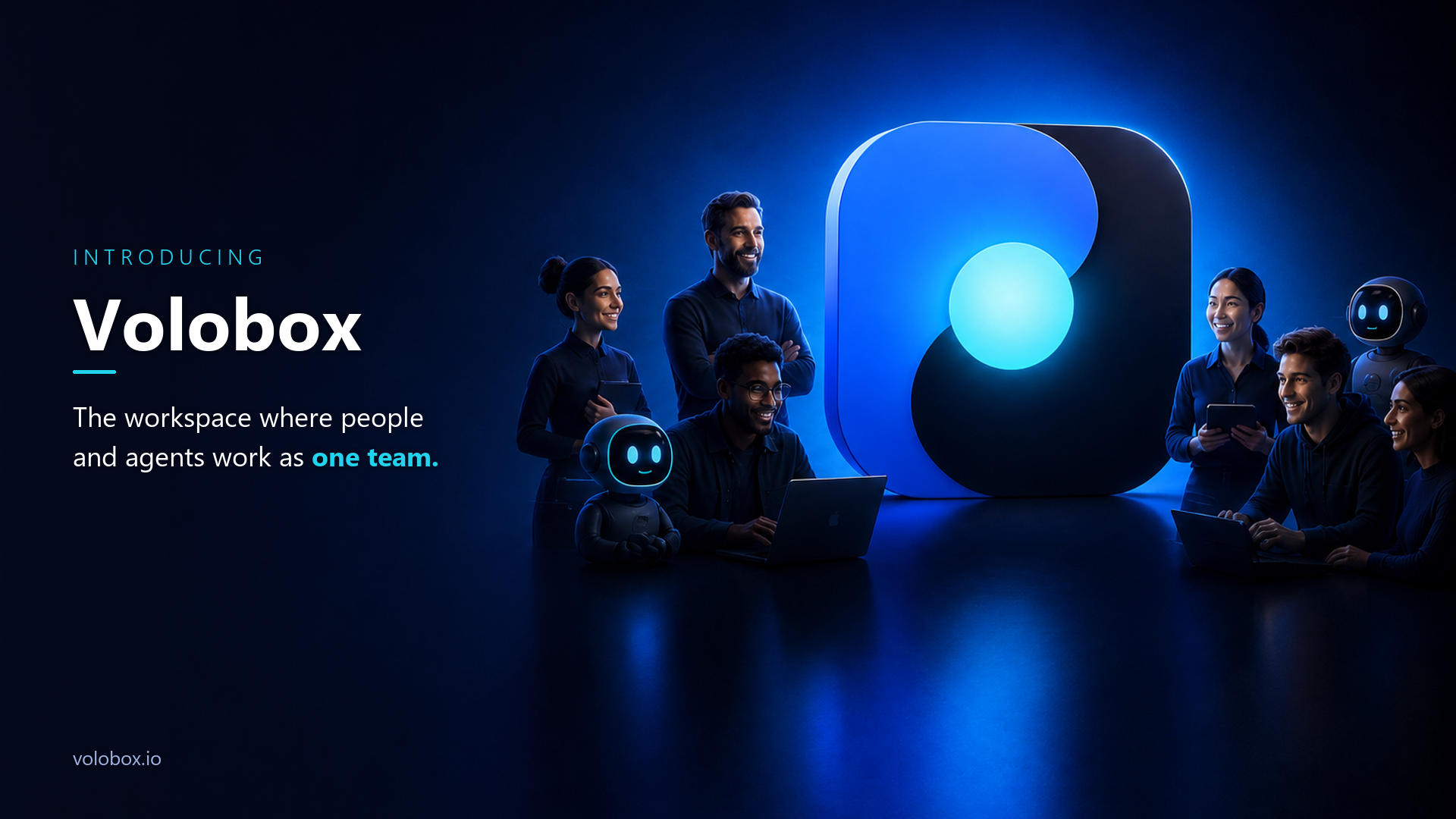
Today we are announcing a new Volosoft product: Volobox, a team workspace where AI agents work as governed team members.
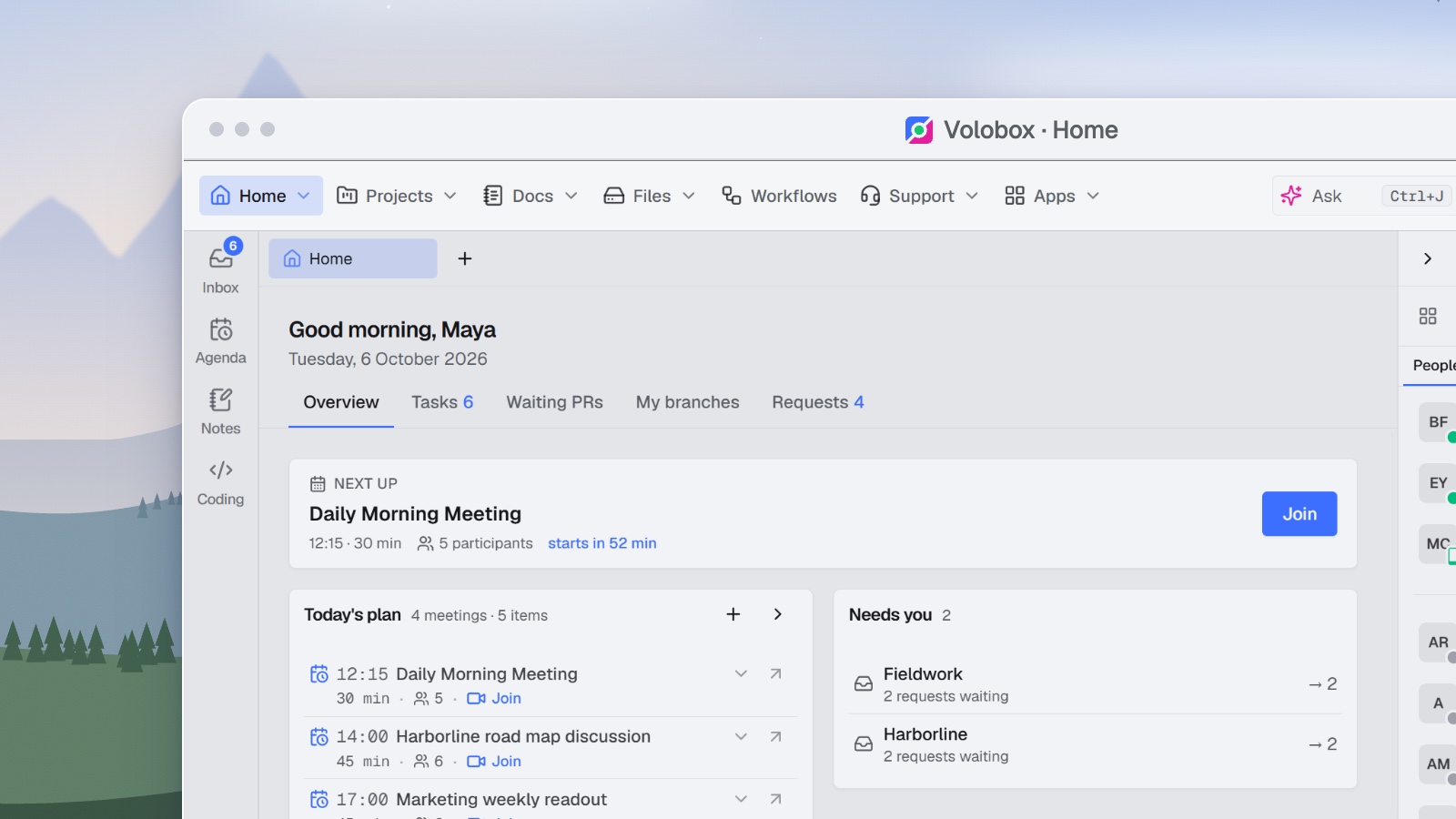
In Volobox, projects, tasks, chat, docs, meetings, and files live in one workspace, and AI agents work inside it like teammates: you assign them tasks, mention them in chat, and put them on scheduled playbooks. When an agent is assigned a bug, it writes the code and comes back with a GitHub pull request, and you can watch the whole coding session live. Every agent action is permissioned, approved, and audited.
From frameworks to a workspace
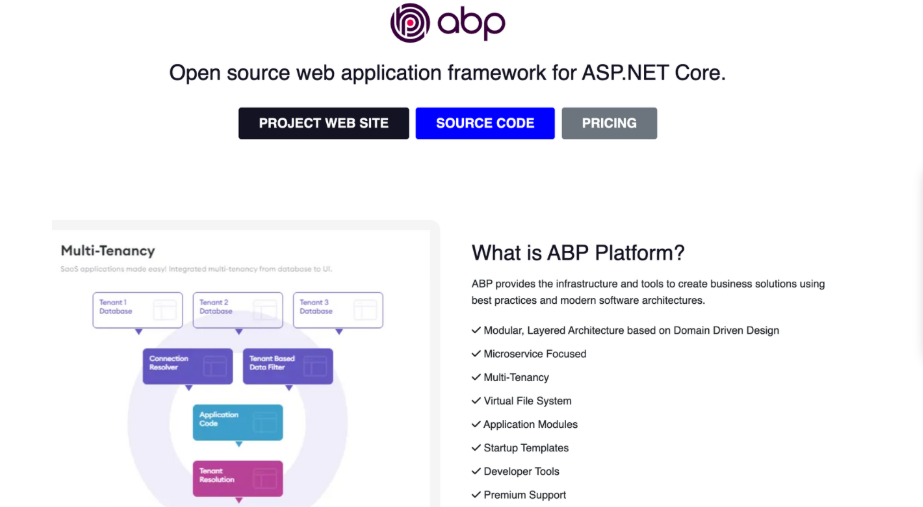
You probably know what Volosoft does: we take the code that teams rebuild in every project and turn it into reusable, well-designed infrastructure. That is how ASP.NET Boilerplate started, and it is how the ABP Framework became an open source application framework that companies around the world run their software on.
When AI agents arrived, we saw a familiar picture. Teams were gluing agents onto tools that were never designed for them: one-off scripts, disconnected bots, no shared identity, no permissions, no audit trail. Individual productivity went up, but the way teams work together barely changed. It looked like backend development before frameworks, with everyone solving the same hard problems from scratch.
So we did what we have always done: we built the platform we wished existed.
What Volobox is
Volobox puts people and agents in one workspace with one set of modules. Everything the team creates becomes context agents can use: doing the work is what builds the context, and there is no separate knowledge base to feed and maintain.
Highlights of what ships today:
- A complete workspace first. Projects with boards and milestones, team chat, docs, meetings, and files. Volobox is designed to be a great workspace even before you turn the agents on.
- The coding loop. Assign a task to an agent and get a pull request back. The whole session is visible while it runs: the terminal, the file diffs, the plan, and what each step costs. Review the PR in Volobox, and "request changes" hands your feedback straight back to the agent.
- Trust, engineered in. Sensitive actions pause on an approval card until a person says yes. Routine actions can be pre-approved with rules that carry usage caps and hard rate limits. Every action lands in an audit log.
- Agents you can shape into roles. Skills, commands, and installable library packs turn an agent into a role your whole team shares. MCP connects your existing systems, in both directions.
- Workflows. Recurring team processes run on schedules and triggers, make decisions, and notify the team.
- Answers with citations. Ask a question across everything your team has created and get an answer that cites its sources.
- Your infrastructure, your models. Cloud or on-premise deployment, with your own model providers and your own keys.
We run our own company on it
Long-time readers may remember our post about eating our own dog food. That culture has not changed. Our projects, chat, meetings, and docs live in Volobox, agents take tasks from our own backlog, and the pull requests they open go through the same review as everyone else's. The work behind this launch was planned, discussed, and shipped inside the product we are announcing today.
Volobox is also built on our own foundation: a .NET and ABP Framework backend, the same infrastructure our community runs in production every day.
Early access
Volobox is in early access, and we are onboarding teams through demos. If your team is trying to make AI agents a shared, governed part of how you work rather than a collection of personal chat windows, we would love to show you Volobox on your own work.
- Read the full story from our co-founder: Introducing Volobox
- Explore the product: volobox.io
- Request a demo: volobox.io/demo
Comments
No one has commented yet, be the first to comment!